How I Use Architecture to Design a Wedding
How I use architecture to design a wedding: India Bottomley of Best Events Co. on reading a venue's bones, then working with flow, layering, contrast and story.
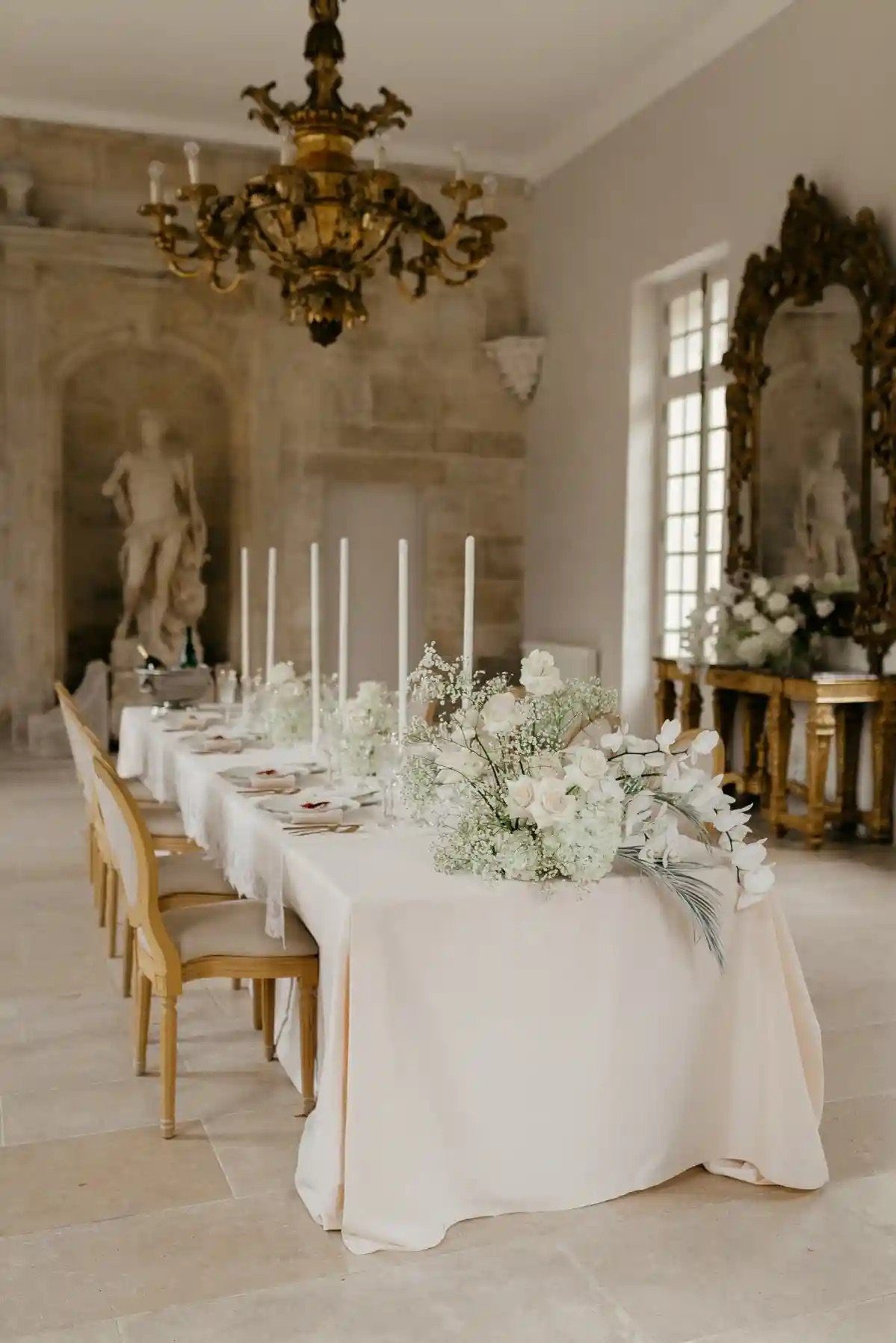
Every venue I walk into is already making decisions for me. The height of a ceiling tells me how tall the flowers can be, and a staircase tells me where the couple will be seen first. I think of architecture as the first designer on every wedding I work on, and my job is to listen to it before I add anything of my own.
That is the opposite of how a great deal of event design is done. The temptation is to arrive with a concept and impose it: to drape what you do not like and light what you do. I have never seen that approach produce a room that felt as though it belonged where it was. The weddings I am proudest of look as if they could not have happened anywhere else, and that comes from working with a building rather than over it.
Find What the Building Does Best
Every venue has one thing nobody else has, plasterwork say, or a run of industrial steel beams. I leave those things uncovered and build toward them.
In a historic European ballroom with gilded details and frescoes, I kept the palette to soft ivory and gold so the room's own richness stayed in charge. The floral arrangements echoed the curves of the plasterwork. The lighting was aimed so that guests looked up and saw the painted ceiling, which most people in a room like that never do; they look at each other, at the table, at their phones, and a ceiling someone spent years on goes unnoticed until a light is pointed at it. In a modern gallery with white walls and an open plan I did the reverse. We used sculptural flowers and contemporary furniture and let the clean lines stand.
Architecture Decides the Flow
How guests move through a day matters as much as what they see, and the building usually has a view on it. At one estate, the ceremony took place in a walled garden; guests then followed a lantern-lit path to a courtyard for cocktails and finished in a large dining hall for the reception. The path was the design decision. It set the pace at which guests arrived at the next drink.
Layer to Warm a Room
Layering is how I bring out a venue's character without disguising it: draping to soften a stark industrial space, velvet and brass against the stone walls of a castle. In a centuries-old abbey where the walls and floors were cold gray stone, I brought in wooden tables, soft linen runners and hundreds of candles.
Contrast, Carefully
Sometimes contrast is what makes a venue memorable. In Mediterranean villas with sun-soaked walls and terracotta tiles, I have introduced black-and-white details for a modern edge. Contrast needs a steady hand, though. Where a venue has a feature that defines it, stained glass or a view of the Eiffel Tower, the subtler approach is almost always the right one.
Let the Room Tell the Story
One of my favorite projects was a wedding in an Art Deco theater for a couple who loved old Hollywood glamour. We used velvet drapes and gold accents and held the ceremony on the spotlit stage, so the building and the couple were telling the same story. When a couple brings me a cultural tradition, I start by finding the part of the building that was made to hold a gathering of that size and shape, and work outward from there.
Before the Mood Board
So when you are choosing a venue, look closely at the walls, the windows and the small details. They hold most of the design already, and that is where I start, every time, before anyone shows me a mood board.
