How to Make Your Wedding Accessible
How to make your wedding accessible in France or Italy: venue checks, quiet rooms, interpreters and transport so that every guest can take part in full.
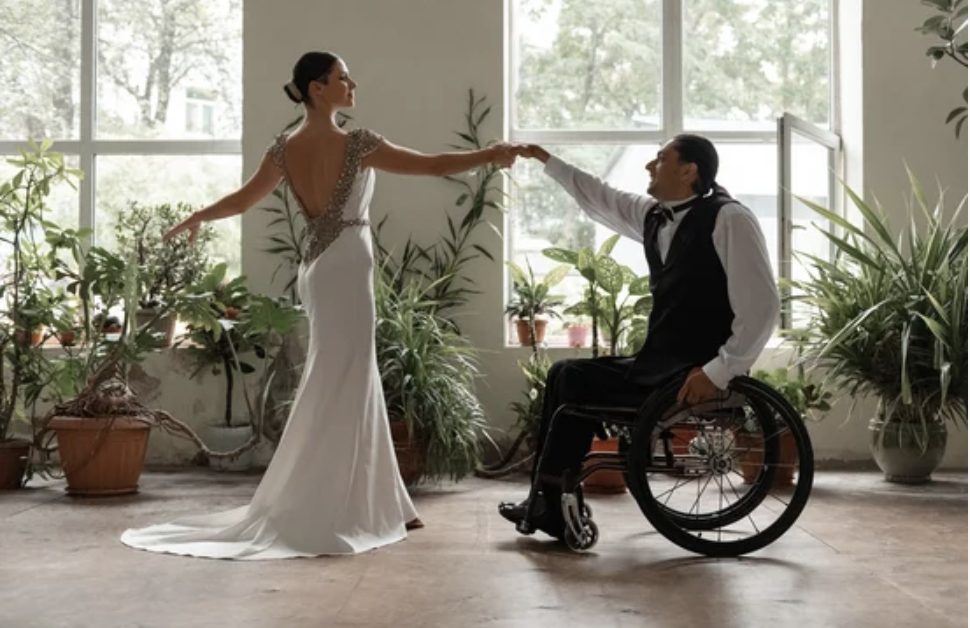
The oldest houses in France and Italy were not built with wheelchairs in mind. Gravel courtyards, stone steps worn into a dip, a chapel reached by a lane laid for carts: this is a good part of why couples choose them, and it is also the first thing we look at when a guest list includes someone with a mobility need. Making your wedding accessible is a planning question, and one to answer before the venue contract is signed.
Making the wedding accessible starts with the venue
If the couple or a member of their party has mobility requirements that are already known when booking, the conversation with your wedding planner comes before the venue is signed, not after. We check for ramps, elevators and accessible restrooms, and we walk the routes a guest will take between them. Pathways need to be wide and clear of obstacles for a wheelchair or a walker.
Outdoor ceremonies and receptions in Tuscany or Provence are the usual sticking point. Grass and gravel are both hard going for a chair. Where the property has paved areas we plan around them, and where it does not, portable, sturdy flooring laid for the ceremony and dinner does the job without changing how the space reads. Gravel, incidentally, is also hard going in heels, so the same flooring tends to be thanked by far more guests than it was laid for. Reserved seating with unobstructed views of the ceremony and the dancing is simple to arrange and often forgotten. Between sites, shuttles equipped with lifts mean every guest travels together.
Quiet rooms and lower volume
For a guest with autism or a sensory processing disorder, the single most useful thing to offer is a room to retreat to. It needs comfortable seating, soft lighting and a pair of noise-canceling headphones, and it needs to be somewhere a guest can slip away to without anyone noticing, which in an old house usually means a room off the main route instead of the one with the best view, and the property's team will know which that is.
The schedule is the other half. A detailed timeline, sent ahead with visual aids where they help, means a guest knows when the music starts and when the speeches are. Background music held at a moderate level and lighting that is neither too bright nor flashing make the whole evening more comfortable for anyone who finds noise and glare tiring.
Seeing and hearing the day
For guests with a vision impairment, signage in large, high-contrast print is the baseline. Menus and programs can be produced in braille, and every written piece, from the invitation onward, should exist in an accessible format. An audio description of the key moments of the ceremony can be arranged for a guest who cannot see them.
For guests with hearing loss, assistive listening devices and clean amplification of the speeches and vows do most of the work. A sign language interpreter covers the vows and the speeches, which amplification cannot. The wedding film can be captioned.
What to settle before the invitations go out
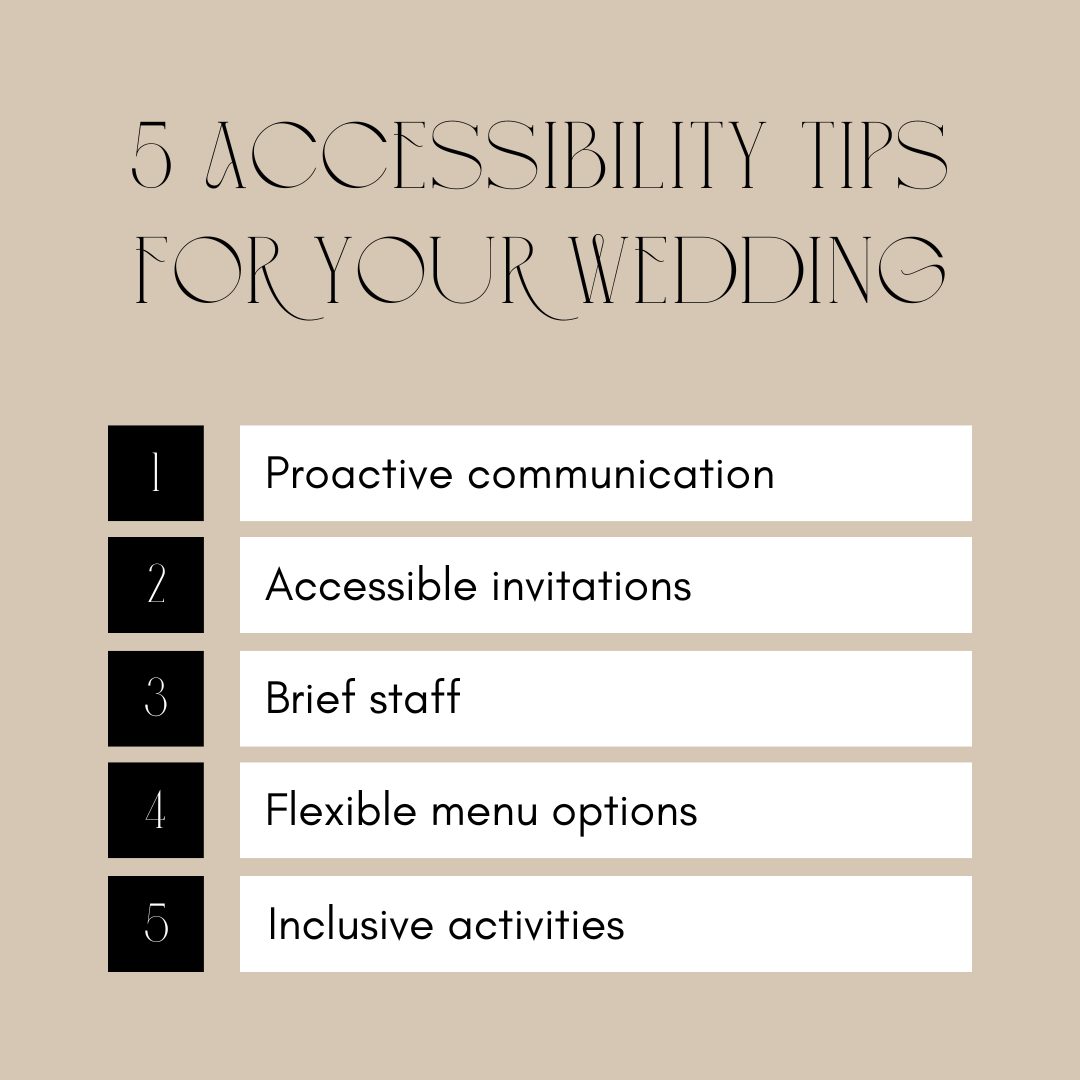
- Ask about needs well in advance, through the RSVP card or in a personal conversation.
- Offer the invitation in more than one format: braille, large print and digital.
- Brief the staff on the day. The property's team and ours should know how to assist a guest with a disability without being intrusive.
- Build the menu around the dietary needs you have been told about, so that every guest sits down to a dinner made for them.
- Plan entertainment everyone can join, including a dance floor a wheelchair can cross.
The first step needs no planner at all: before a venue is chosen, ask each household on the guest list whether anyone has a need you should plan for, and write every answer down.
